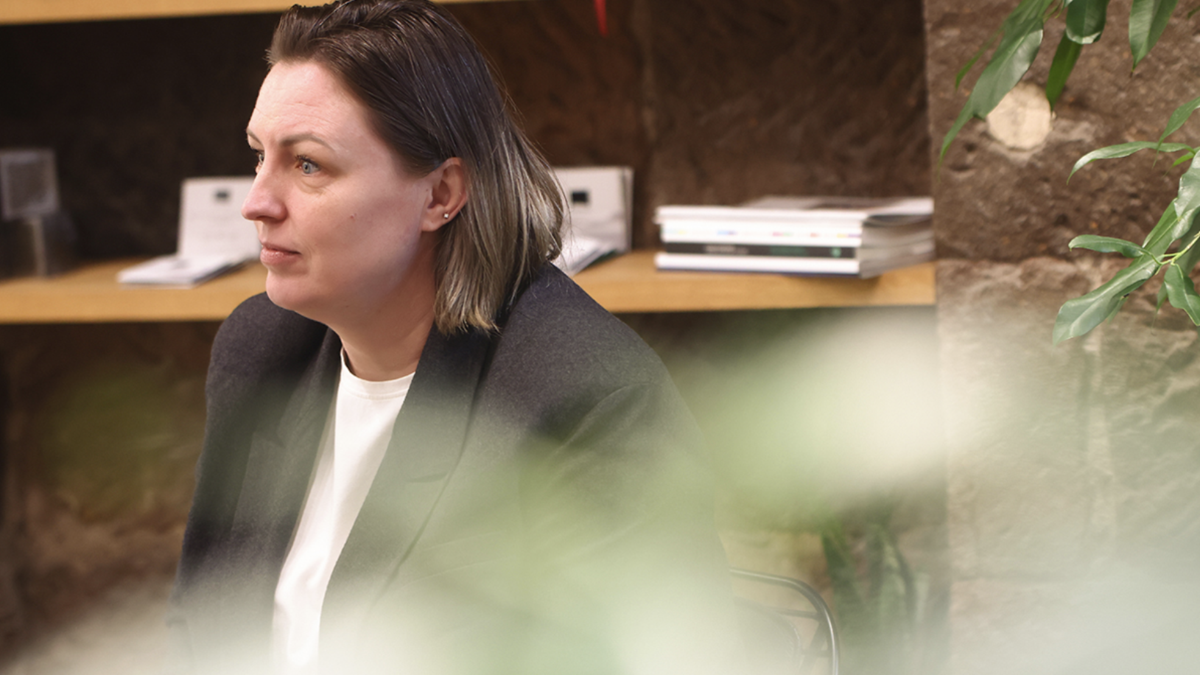
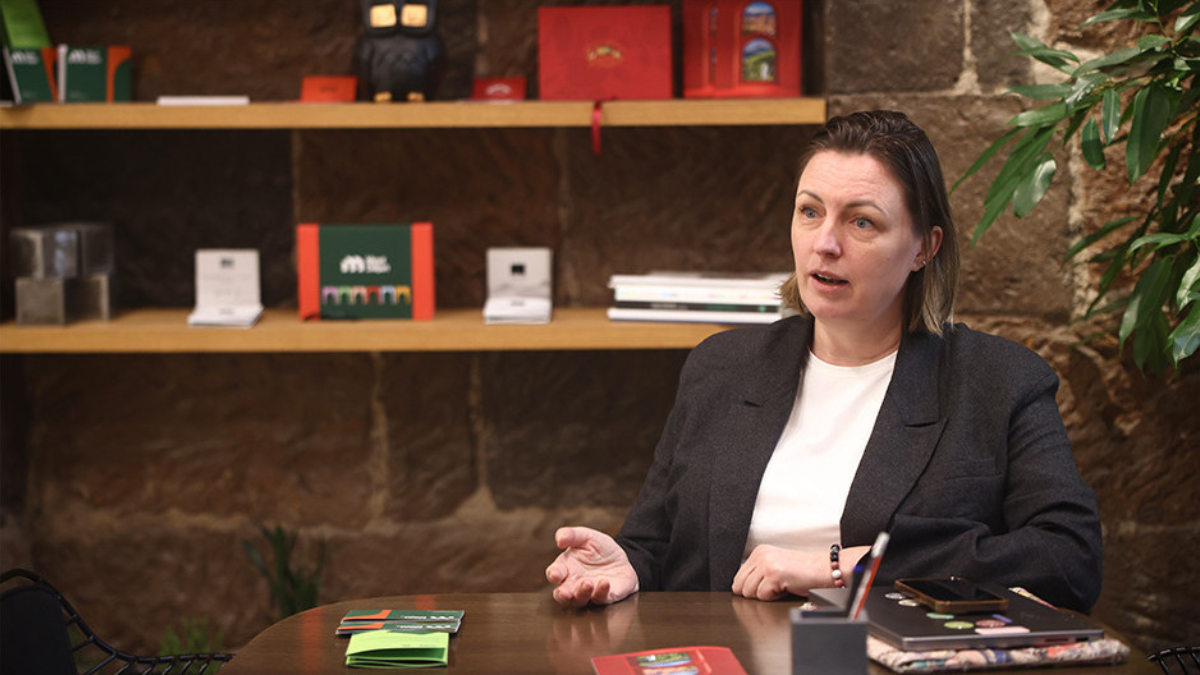
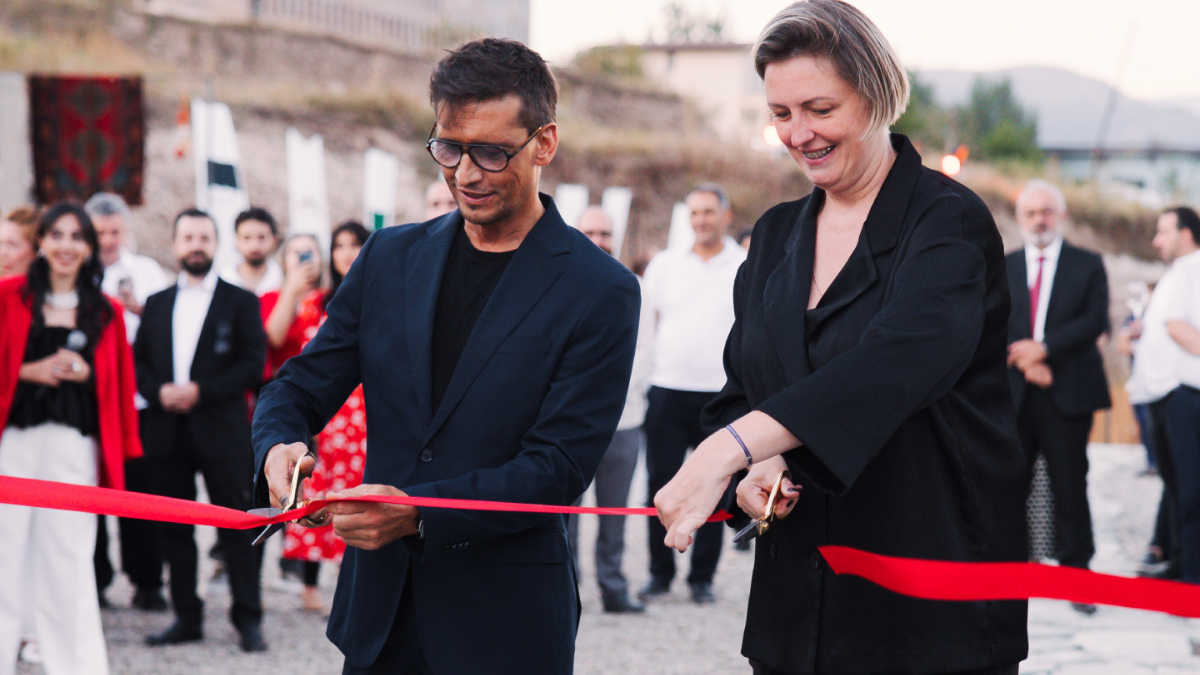
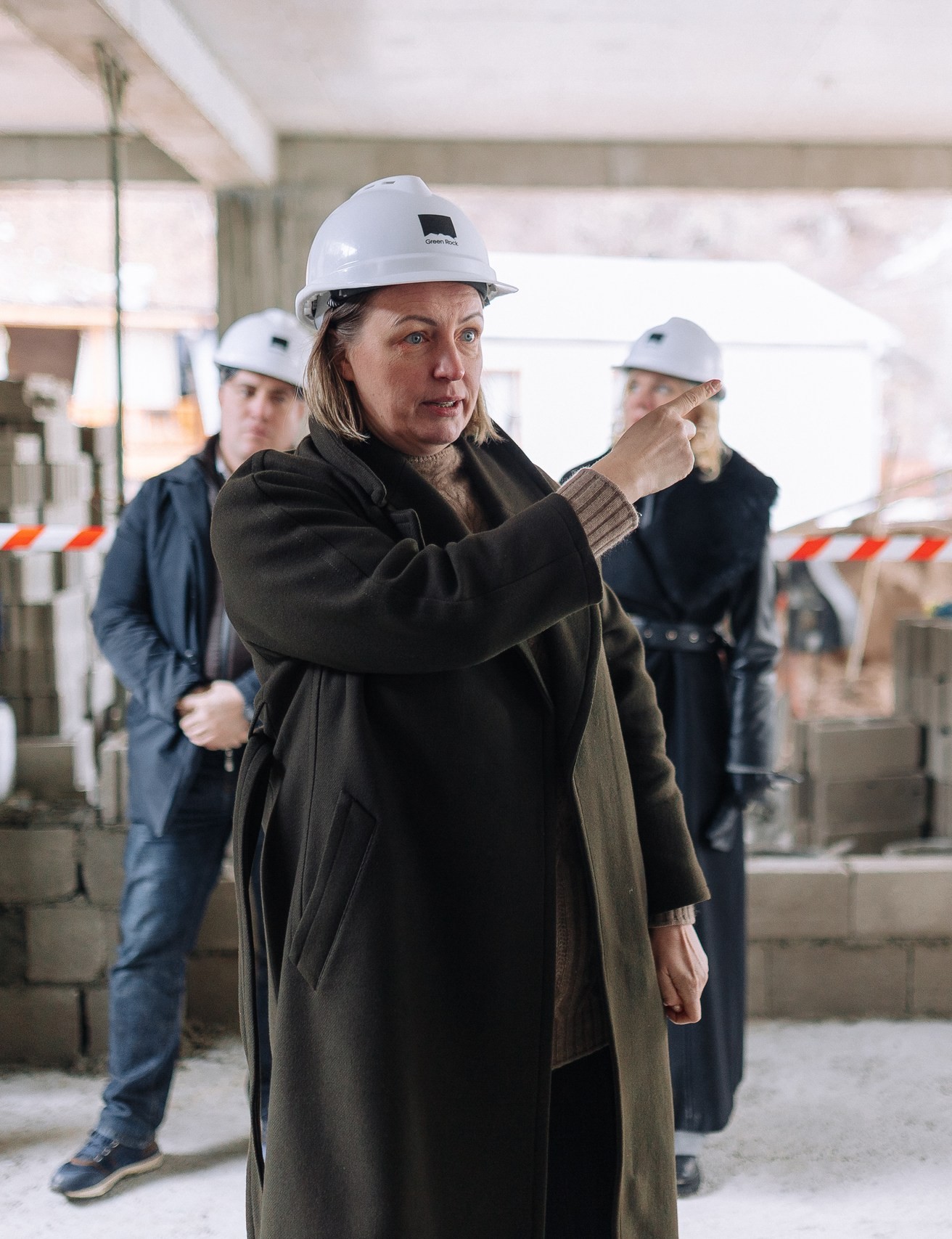
Dilijan has been buzzing with activity in the recent past and has ambitions to become a key destination in Armenia and the whole region. We talked to Ekaterina Bredikhina, Director of Green Rock Foundation, about how they are helping to make this happen.
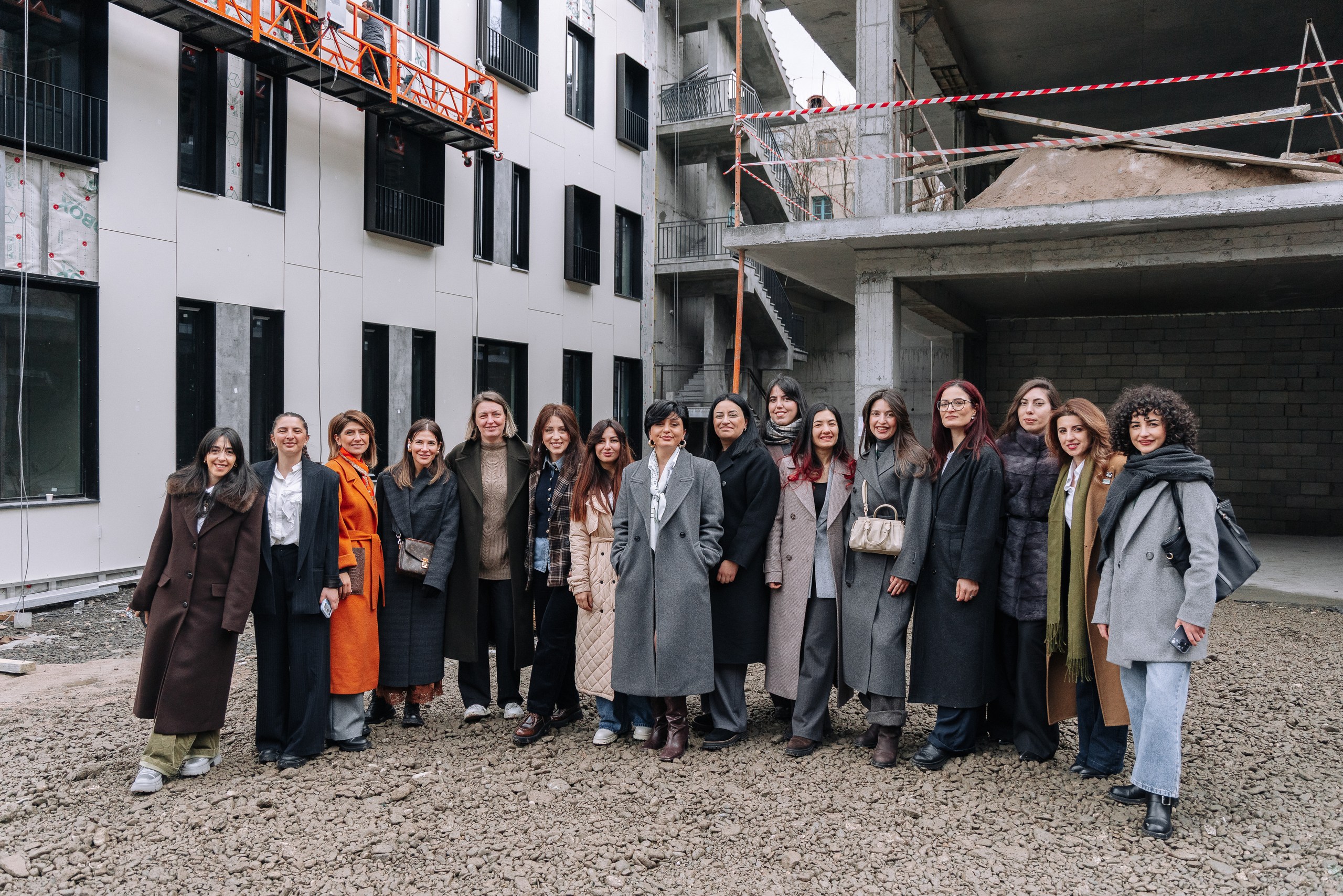
The Green Rock Foundation Team
– It’s great to be here in Dilijan – a place that was best known, until recently, only for its natural beauty and cultural heritage. But something has been changing in the past couple of years. As one of the key players in this ongoing transformation, please tell us more about what is being done to unlock this town’s full potential.
– Well, actually, the transformation of Dilijan started in 2014, with the first Dilijan Development Program, which had several important projects within it, like the Tourism Information Center. Our role now is to make Dilijan a better place to visit and live, and we are focusing in two directions. Our parent company, Green Rock Management Group, is working on infrastructure and large-scale projects such as a luxury hotel, the largest music hall in the region and a couple of other facilities that will be launching very soon – Cabinet Café and Villa 3 community art hub. So that’s the physical infrastructure they are putting in place, while our role as Green Rock Foundation is to develop the social infrastructure, to promote Dilijan as a destination for tourism, business, education, and culture.
We see massive potential. Dilijan is already an educational hub – there’s UWC Dilijan, the Central Bank Training and Research Center, Dilijan Central School that is under Ayb Foundation, and Apicius Armenia. But there is still lots of work to be done. We have seen a lot of difference in the level of activity here based on the season – this place is nearly dead in the low season, unfortunately. We are working hard to change that, so that the people here keep their jobs in the low season or don’t have to close their businesses. We see a lot of potential, but we need to unlock it together with the local enterprises, municipality, Tourism Committee and other key stakeholders. We always say that our mission is to put Dilijan on everyone’s map.
– Tell us more about the role of the Foundation within the overall Green Rock ecosystem. What is the impact you are expecting to make on Dilijan and how does it fit with the ecosystem as a whole?
– We established the Green Rock Foundation in June 2024, but we took a year to strategize and figure out the best structure for our work. We started our activities in June 2025, so we have less than a year of projects on the ground. We act as a kind of corporate social responsibility arm for Green Rock Management Group. We are the “guardians of their sustainability” in a way because we work directly with the community and stakeholders on the ground, and we relay their needs to that large corporation. We have four flagship projects at the moment. The first is Apicius Armenia, which is changing the educational environment and bringing international standards in gastronomy and hospitality into the region.
The second one is Meet Dilijan, which acts as a Destination Marketing Organization for the town, and focuses on promoting it as a place to visit. A newer project that we have is the Dilijan Urban Design Framework, which is not a master plan but more of a guide for the municipality and other stakeholders, aiming at creating a unified set of rules and regulations for public zones and facades of the buildings when it comes to building, rebuilding, renovating, and implementing anything new in the city, giving Dilijan a more uniform charm and beauty. We worked with a group of architects, urban planners, designers, and other experts on this and are now moving into the second stage. By the end of May, we will have a clear set of guidelines, which the municipality will turn into a legal document. The fourth project involves our recent membership in the International Institute of Gastronomy, Culture, Arts and Tourism. We will be applying to make Armenia a world Region of Gastronomy in 2028. We’re working on the bid book now and expect the jury members to visit us in July. If we get this recognition in 2028, it will bring a huge flow of tourism to Dilijan, with a strong culture and arts component.
– That sounds very exciting! Let’s start by diving a bit deeper about Apicius Armenia, which is very important in the context of Dilijan’s local economy.
– Yes, and not only Dilijan! It initially started with the “selfish” focus on our own ecosystem – Green Rock Management Group is building luxury facilities that will need up to 800 top-quality staff members sometime in 2028 or 2029. We started thinking about what we can do to prepare for this. It’s relatively easy to bring people from Yerevan and elsewhere, but would they stay for long periods of time? Also, how fair is it to the local population if they don’t directly benefit from these large investments in their community? They have a sense of ownership for this place, and they would be much more invested in its success. From the very beginning, we realized that we needed to bring an international school here to develop the global standards to which we are aspiring as a destination. We did a lot of research, developing a longlist of candidate schools and then reducing it to a shortlist of twenty potential partners. I visited each one of them and we eventually decided that Apicius International School of Hospitality in Florence would be the best candidate – it is one of the nine professional schools under the Florence University of the Arts. We launched our partnership at the end of 2024 and have developed a program identical to theirs that will be delivered in Dilijan, instructed and supervised by Italian professionals. We have an internationally recognized certification program that takes two years, with the option of doing the second year in Florence. Then we have a program for businesses to send their staff for short-term training.
And our third area of focus consists of master classes with chefs or sommeliers, meaning that anyone can pay and come to Apicius Armenia for a couple of hours and learn something about the culinary arts or wine. We launched Apicius Armenia very quickly and are currently working from a temporary location – our main facility will open in summer 2026 and will consist of a stand-alone building with two floors of classrooms and training kitchens, with an experiential learning restaurant on the third floor, run by students both at the front of the house and the back of the house, and supervised by their Italian instructors. There will also be residential facilities for students and instructors. It is important to mention here that Apicius Armenia engages students in real-life projects almost from day one – they work in a real business setting in what is called a community engagement management institution (CEMI) – this will be an Italian bistro in the town center where the students will work under the supervision of their instructors.
– That’s quite impressive. Coming now to Meet Dilijan, it sounds to me like the aim is to promote Dilijan as a location for experiences. What do you have in mind on this front?
– That’s a tricky question because our objective is to promote Dilijan but to closely engage with other stakeholders – we are leading the process for now, but hope to be just one of many players in the near future. This is a community-driven initiative. For the moment, we have mapped all the restaurants, hotels, guesthouses, and experience providers. We see our mission as making this information visible to the larger public. When we see that there is an element missing that would complement the whole picture well, we are happy to design and develop it. There are lots of creative and entrepreneurial people in Dilijan. But, unfortunately, very few people know about them. So our task is to use storytelling to shine a light on these people. We are also now becoming part of a global standardization community and are educating ourselves about how to bring these high standards to the existing service and hospitality businesses in Dilijan. This is important because the businesses and events that are on the Meet Dilijan website need to meet certain criteria for quality – this will ensure that visitors to Dilijan have the best experience here.
– Tell us more about your engagement with the youth of Dilijan. What can young people here expect from Green Rock Foundation?
– We call that part of our work the NextGen project. We are supporting talented youth here, and initially planned to provide a microgrant to just one local initiative that would make Dilijan a better place. As we were making a decision about whom to support, another donor joined our cause, so we managed two microgrants. The first one was a schoolkid’s initiative to renovate a playground in a remote district. We worked with him from start to finish – mentoring him so that he could learn how to plan the project, calculate a budget, order what he needed… This was an important learning experience for him. The second project was implemented by a young local girl who developed various walking tour routes and placed QR codes which tell visitors stories about the key sites that they see on these routes. We have expanded the project a bit now with a total of four such grants, each provided by private donors. So, this year, we will invest 1500 USD into such initiatives submitted by youth from 15 to 25 years of age.
– I know that you have a specific approach to a problem which is common to many cities in Armenia – stray dogs. What are you doing on this front?
– Yes, this is a very difficult issue. Stray dogs have been in Dilijan forever and we have talked to local volunteers who have years of experience on this topic. They’ve told us that the number of dogs in Dilijan and surrounding villages has been close to 700 in recent years. If we sterilize and vaccinate them, it can take no less than five years for their population to plateau, because you can expect several dozen dogs to appear from other places every year. And you need to constantly check the dogs to make sure that they aren’t spreading diseases. The cost of maintaining dog shelters for several hundred dogs is massive. So we decided to educate the community about how to treat the dogs, and where to feed them so that they don’t concentrate in large numbers in tourist spots. The volunteers monitor the process and make sure that unmarked dogs are taken to vets for checkups. There is a storytelling element to all this. The dogs are part of Dilijan and this is all about how we live together, coexisting peacefully.
– Last question. Where will Dilijan be in five years, in your opinion?
– I think the question is not about where Dilijan will be, but where everyone else will be. And we want everyone to be in Dilijan! We would love to see more people relocate here, and hopefully the infrastructure is coming together in terms of education, business, and other infrastructure. Dilijan is a wonderful place and now that I am living here, I often find myself deciding to skip the weekend trips to Yerevan and spend more time in town!
Источник:
Banks.am – Interview with Ekaterina Bredikhina
https://banks.am/ru/news/articles/30386